
P-01PAIN POINT
Terminology drift triggers compliance risk
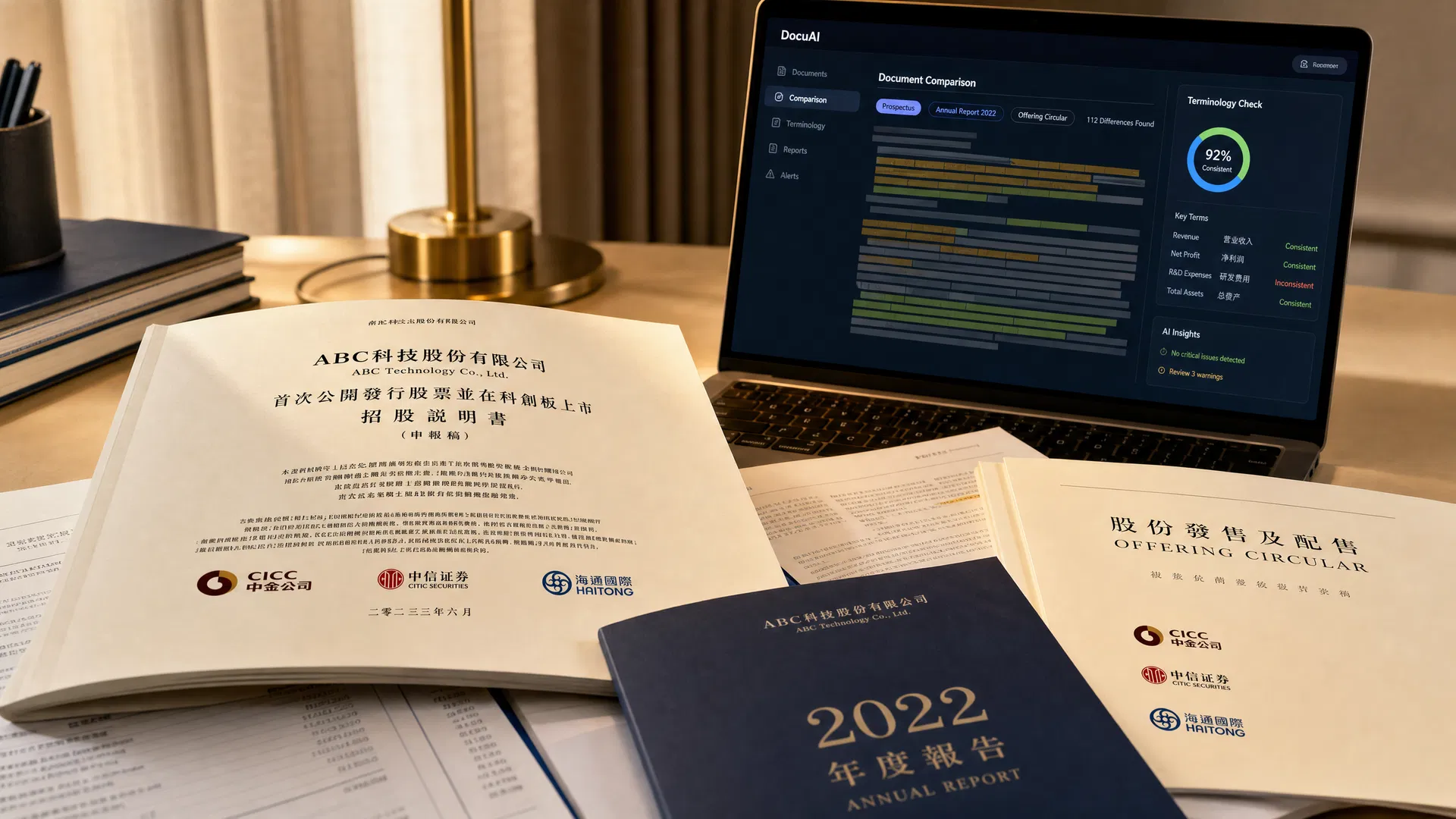
Bilingual prospectuses run hundreds of pages. Manual term-by-term comparison is brittle and error-prone — a single mismatch between '净利润' and 'net profit' can trigger a regulator inquiry.
GSAI · 2026 · 05 · 0023
AI Solution BriefEnd-to-end automation for prospectuses, annual reports, circulars, and offering circulars — bilingual term checks, version diffing with risk flags, email archival, and project workflow.
Terminology accuracy
96.1%
Capital markets documents are among the most complex, highest-stakes documents in finance — bilingual, drafted across multiple parties, revised many times, and unforgiving of error. A single terminology mismatch, number slip, or version mix-up can trigger a compliance issue.
Handling capital markets documents is high-touch work. Terminology checking, version diffing, file archiving — repetitive labor that consumes huge amounts of team time, with zero tolerance for error.
Bilingual prospectuses run hundreds of pages. Manual term-by-term comparison is brittle and error-prone — a single mismatch between '净利润' and 'net profit' can trigger a regulator inquiry.
An average IPO project goes through 10+ rounds of revisions. Every round means manually diffing old and new versions to find changes and assess risk. Blackline production is slow and easy to get wrong.
Documents move through email, WeChat, and shared drives with chaotic naming and manual archiving. Project managers burn hours just locating files and confirming versions.
A wrong number, date, or name doesn't just hurt layout — it lands directly in compliance review, client trust, and delivery.
From prospectuses to annual reports, from circulars to offering circulars — every document drives heavy terminology checking, version control, and multi-party handoff.
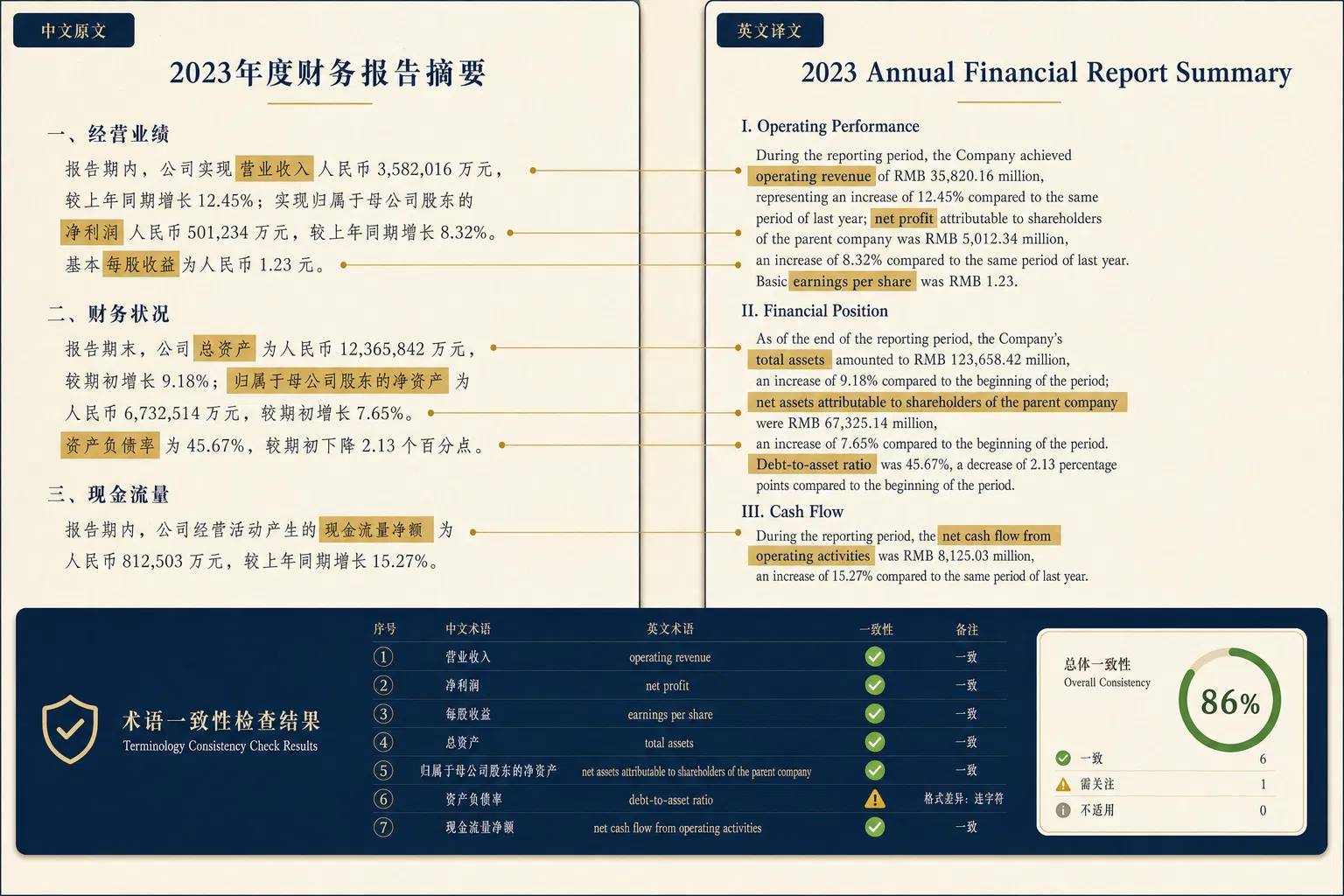
Line-by-line checking, handled by AI
Built around your project- and company-level term bank, the AI scans bilingual documents end-to-end — flagging inconsistent translations, formatting mismatches, and uncatalogued new terms — and outputs a structured consistency report.
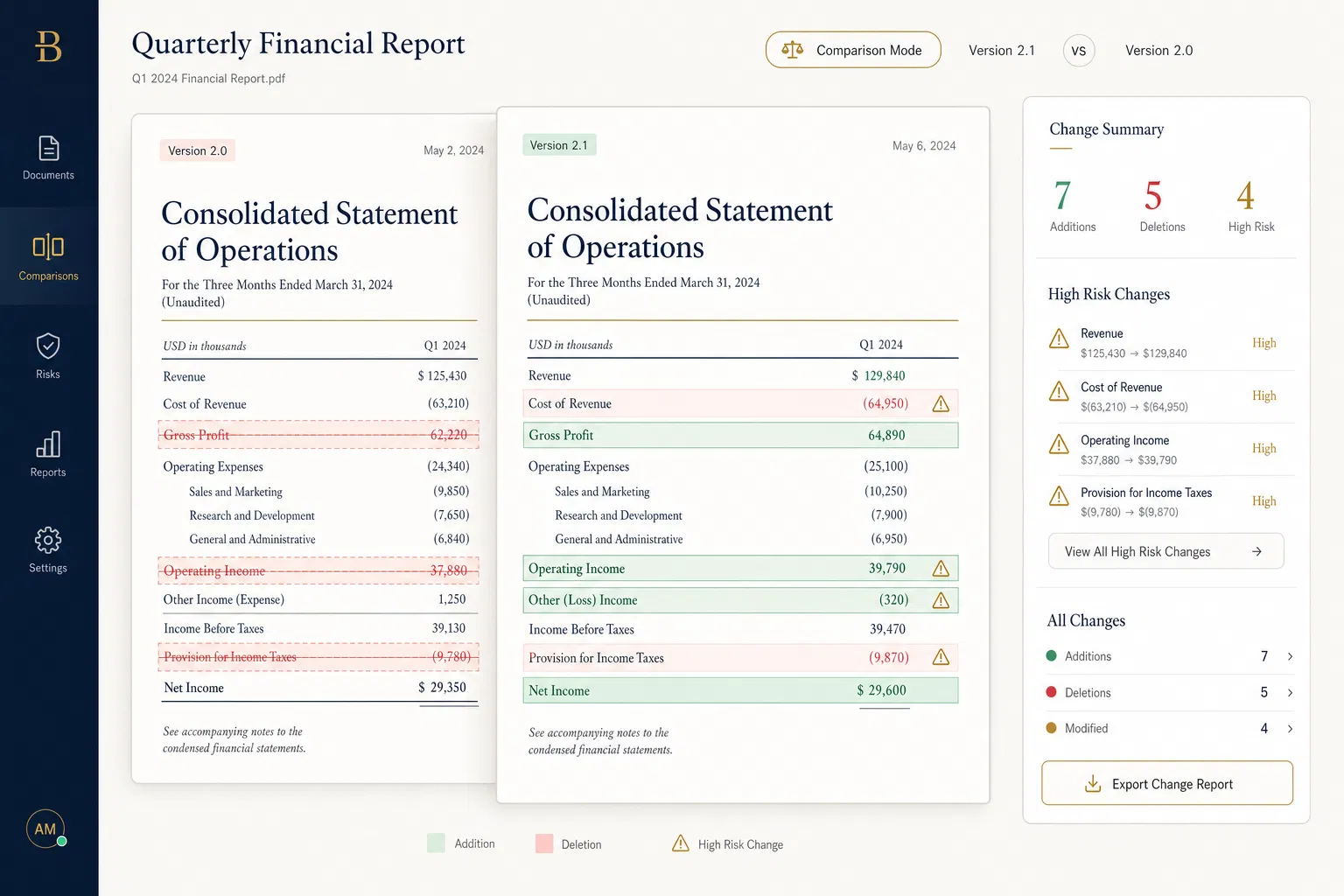
Every change, surfaced and explained
On every revision, the AI auto-generates a Blackline diff report, flags high-risk changes (amounts, dates, names), and produces a change summary with risk rating.
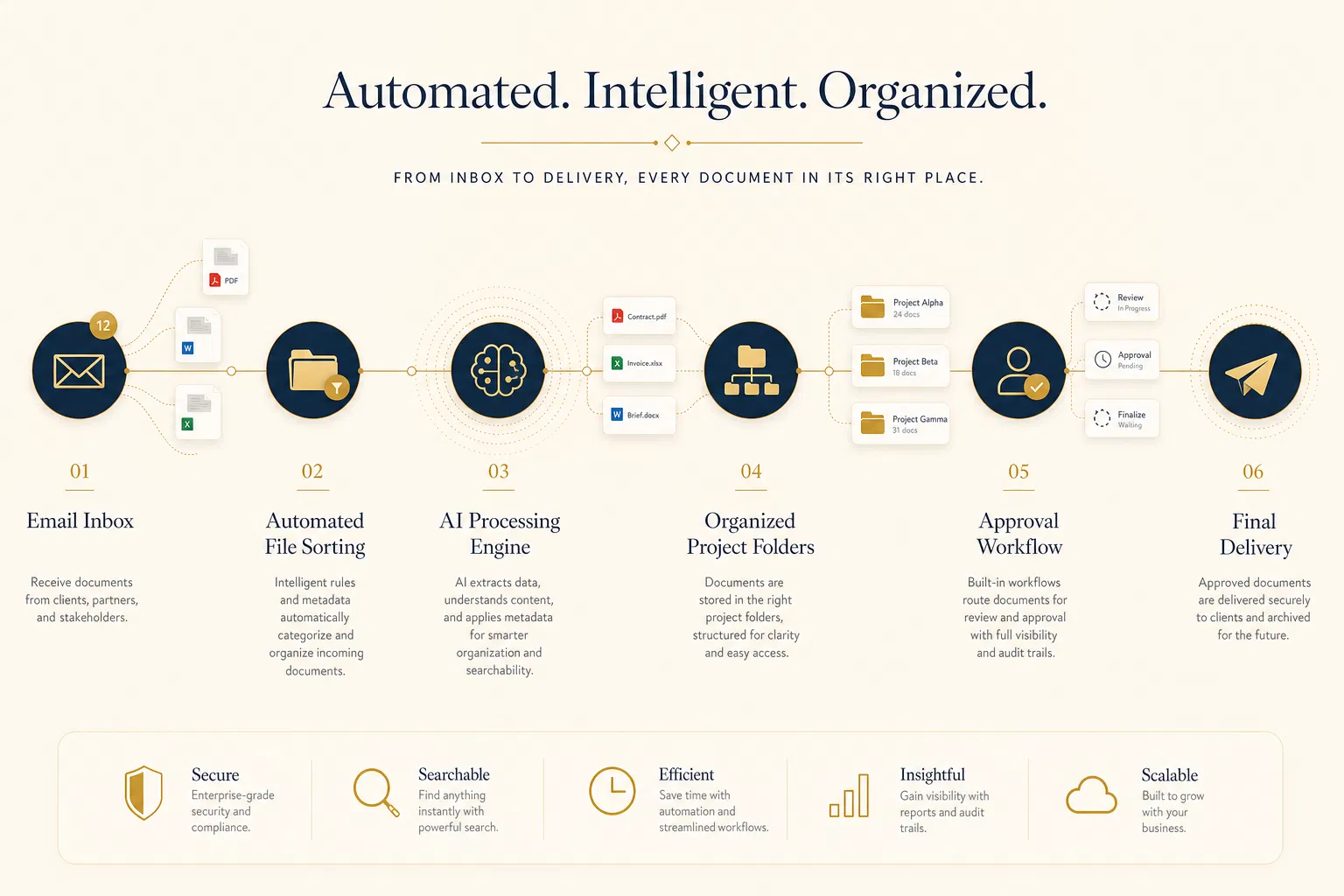
From inbox to delivery, fully automated
RPA pulls attachments from email and shared drives, archives by project code, then runs format preprocessing, system intake, approvals, and notifications — keeping every handoff traceable.
All three layers share a unified project object — every IPO or annual report project gets its own workspace, version tree, check report, and operation log.
Understand, align, judge
Reads bilingual financial documents at the document layer.
Move, archive, notify — quietly
Closes the loop on repetitive system tasks.
Multi-party collaboration with a clear paper trail
Surfaces project status across teams.
All cases below come from real projects, sanitized for disclosure. Each one covers the problem, the solution, and the business outcome.
Securities and invoice data processing — knowledge-graph driven
Key information in bond documents was scattered across multiple file formats. Manual extraction was slow and error-prone.
Used a knowledge graph to extract key data from bond documents, auto-index it, and generate check reports — covering the core bond data flow end to end.
Covered 100K+ documents; the core bond data flow now runs end-to-end automated.
Policy scan handling — RPA + AI automation
Policy scans required manual structured-field entry, turning the back office into a 'data entry factory'.
Built an RPA + multimodal AI pipeline: extract structured fields, write to the business database, and generate reconciliation reports in real time.
Manual entry dropped ~78%; back office shifted from data entry to exception review.
AI handwritten order recognition
Handwritten orders are highly unstructured — traditional OCR fails on connected strokes, edits, and folds.
Built a multimodal recognition and validation loop. Frontline staff can place and archive orders with a single photo.
Field-level accuracy went from 68.4% to 96.1%; manual review workload dropped 82%.
View public caseFinancial documents carry highly sensitive data. We bake security into the architecture from day one — not bolted on afterward.
AES-256 for files in transit and at rest. TLS 1.3 transport. Keys are customer-managed or fully managed by us.
Deploy in your own data center or private cloud. Data stays in your environment and meets financial-industry data security standards.
All file actions — access, view, download — are logged in full. Trace by time, person, or project.
Automated expiration cleanup + version retention policies meet compliance archive requirements and prevent long-term exposure of sensitive files.
Role + project-based permissions control document visibility, operation rights, and approval flow.
Designed to align with ISO 27001, SOC 2 Type II, GDPR, and other major security and compliance frameworks.
Start with one working MVP — let the team see AI actually helping them — then layer in the other two scenarios. Unify them into a platform last.
Related solutions
AI, capital-markets docs, OCR, vision, IoT and membership operations — composable for your industry.
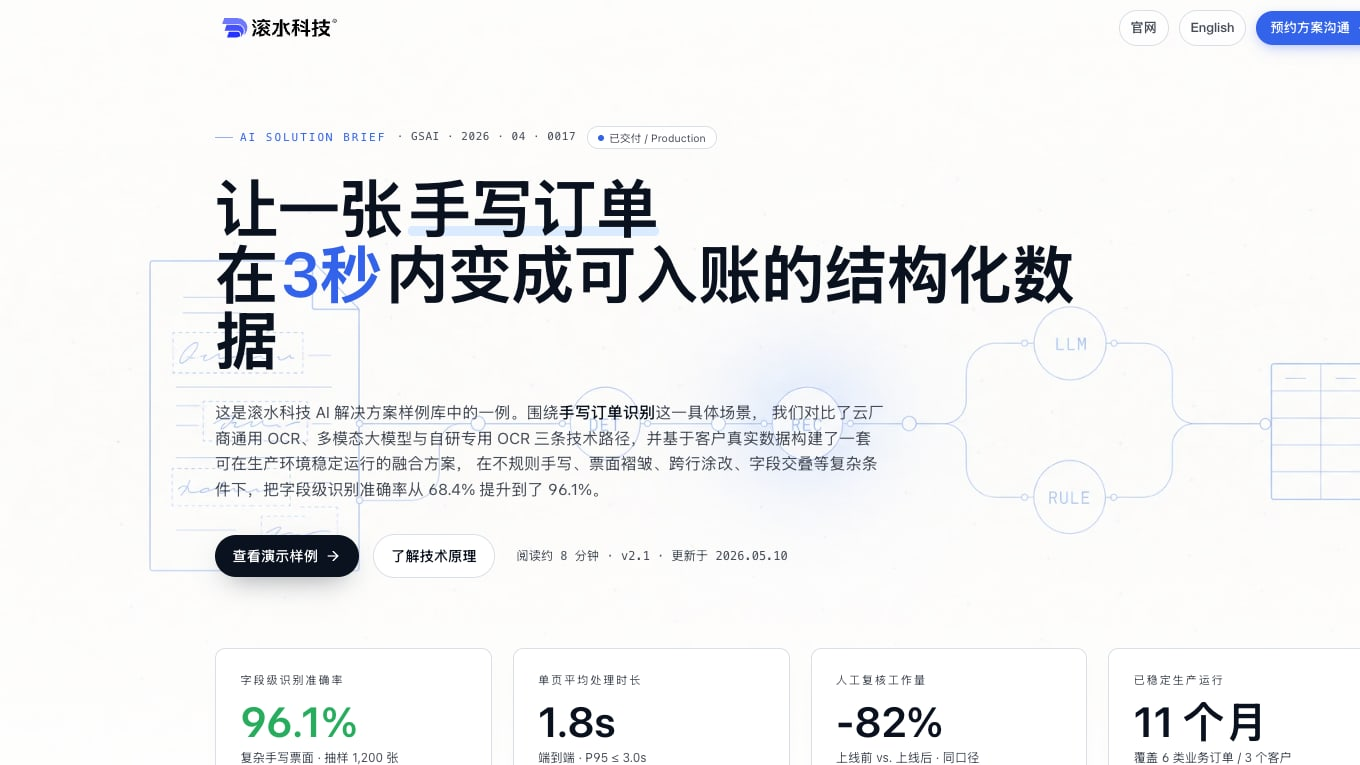
Turn handwritten and scanned orders into structured ERP records — 96%+ field accuracy, multimodal validation, and direct write-back into your systems.
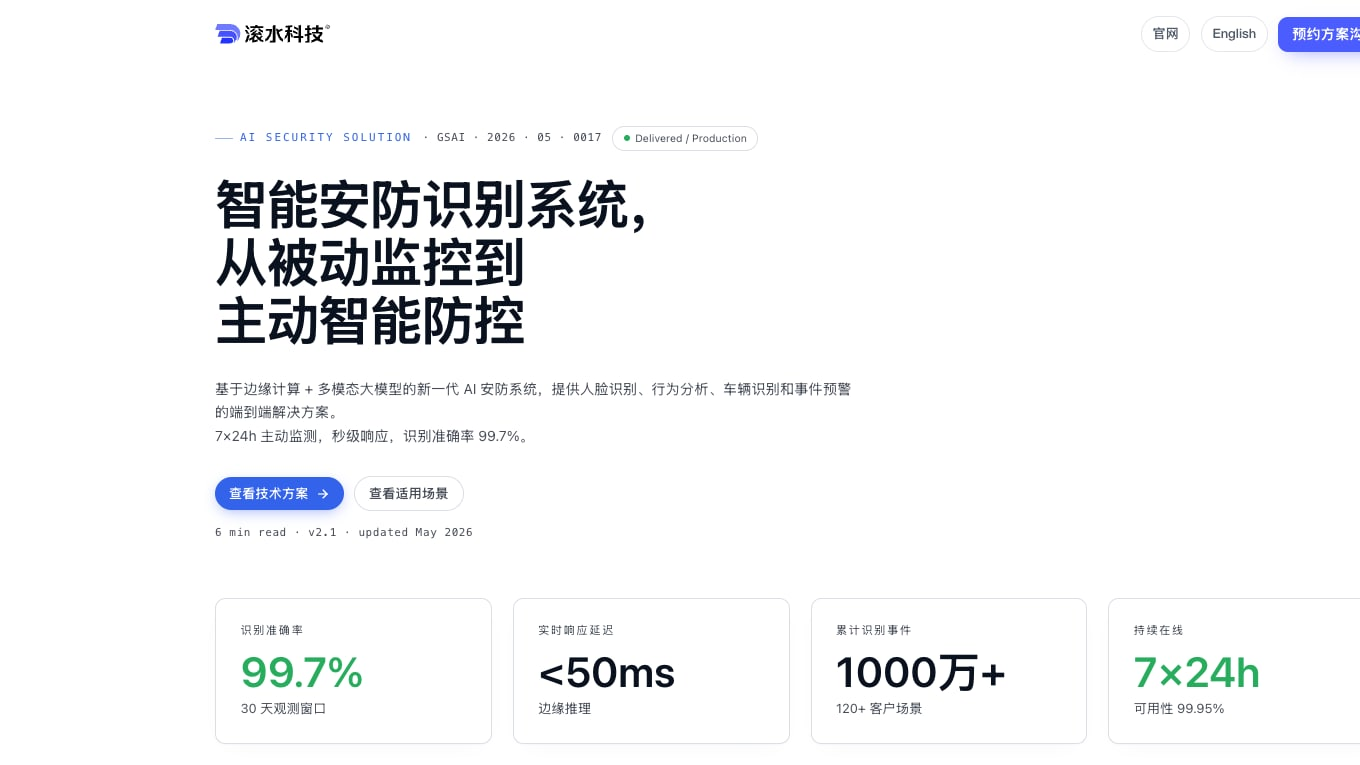
Edge inference and multimodal models for face, behavior, and vehicle recognition — 99.7% accuracy, sub-50ms latency, deployed 24/7 across cities, plants, and campuses.
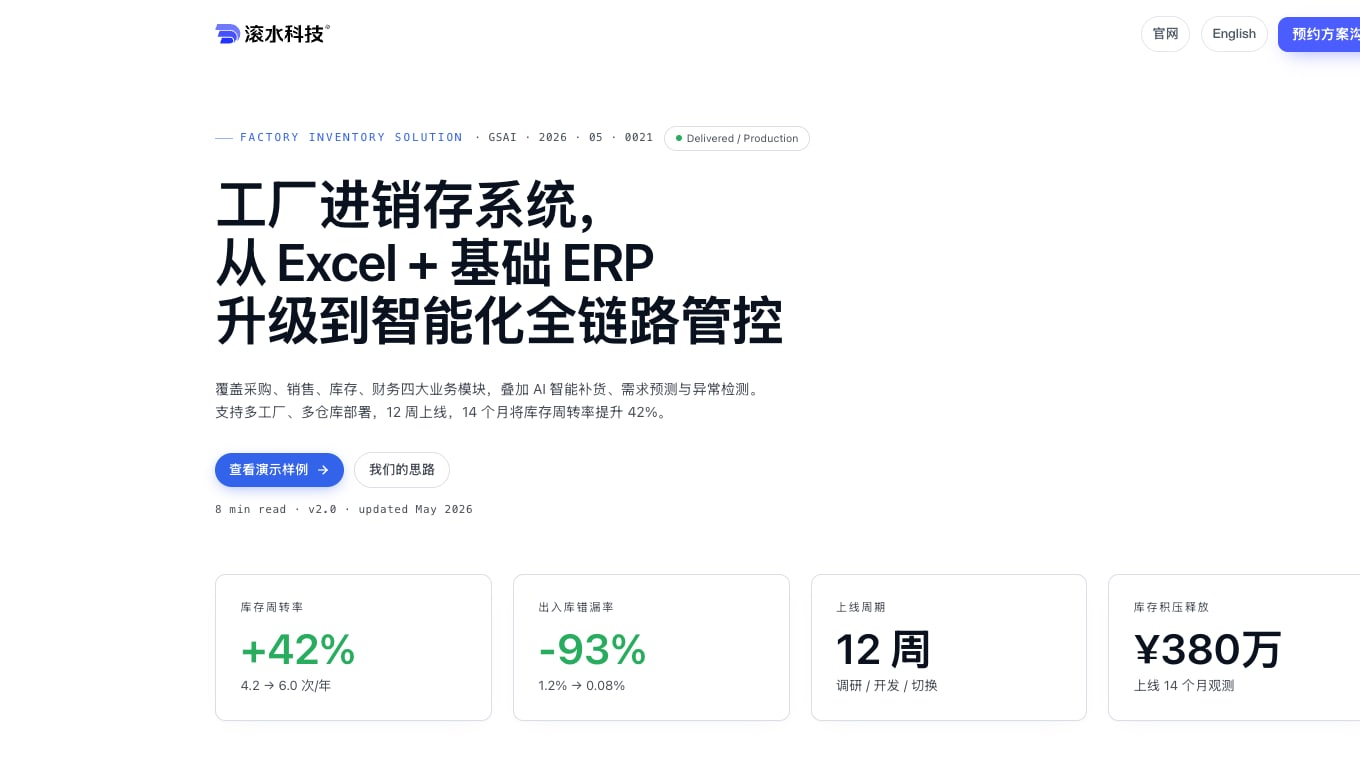
A custom inventory and procurement platform for multi-plant manufacturers — AI demand forecasting, automated replenishment, and 42% higher inventory turnover in 14 months.
We unpack the workflow with you, judge whether AI is worth using and which approach makes the most sense, then come back within 5 business days with a practical initial plan and estimate.